Wood fences for Louisville yards, from cedar privacy to split rail
Ask a Louisville homeowner to sketch a fence and most will draw boards. Wood suits a brick ranch in Okolona as naturally as an older frame house close to downtown, it goes up tall and tight when privacy is the goal, and a broken piece can be swapped out with ordinary hand tools. It is also the material most sensitive to choices nobody sees from the driveway: which species went into the posts, what the lumber tag says about chemical treatment, what metal holds it together and whether anyone puts a finish on it after the first summer. This page works through those choices for Jefferson County yards, where sticky heat, heavy clay and ice storms all test a wood fence, so a proposal makes sense before you sign it.
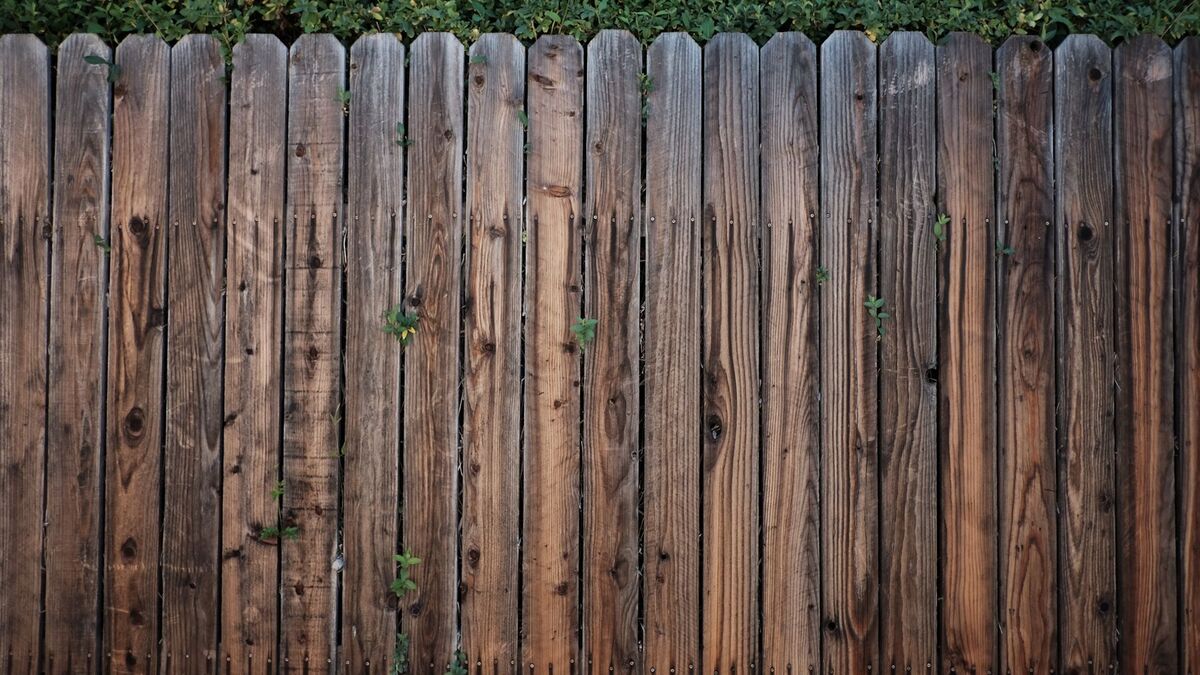
Southern yellow pine or western red cedar for a Kentucky yard
Two species account for almost all residential board fencing around here. Pressure-treated southern yellow pine is the workhorse: dense, stiff, widely stocked and the lower-cost starting point. The preservative is forced deep into the cells under pressure, which is what lets pine survive outdoors at all. Its weak points are movement and checking. Pine arrives wet from the treating plant, then shrinks, twists and splits along the grain as it dries through a Louisville July.
Cedar carries natural oils that slow decay and discourage insects, so it does not need a chemical bath to last. It is lighter, moves less as humidity swings, takes stain beautifully and ages to a soft silver if left alone. The trade-offs are a higher material bill and a softer surface that dents and gouges more easily. A popular compromise around Jefferson County pairs treated pine posts and rails, the parts that bear load or touch soil, with cedar pickets where looks matter most.
The lumber tag that tells you whether a post can live in the ground
Treated wood is not all treated to the same degree. Stores sell boards meant for decks and fence pickets that stay above grade, and separately they sell lumber soaked with a heavier dose of preservative intended for burial or constant contact with wet soil. A small plastic tag stapled to one end of each board identifies which category it belongs to. For any post that will sit in a hole, only the ground-contact grade makes sense, and a careful proposal names it in writing.
This matters more in Louisville than in many places. The clay here holds water for days after a storm, so the buried section of a post sits in damp, oxygen-rich conditions that fungi love. An above-ground board used as a post can soften at the soil line within a handful of seasons, and when that happens the boards and rails attached to it are dragged down too. Cedar posts are sometimes used, but heartwood cedar in the ground still loses ground to rot sooner than properly treated pine, so many installers favor treated posts even under cedar boards.
Privacy, picket and split-rail designs common in Jefferson County
Style drives the look, the amount of lumber, the wind exposure and the labor, so it is worth picking deliberately. These are the designs you will see most around town:
- Stockade: pickets butted edge to edge on one face, often with pointed or dog-eared tops. Straightforward and economical, but gaps open as the boards dry.
- Board-on-board: a front layer of boards plus a back layer that covers each seam, so shrinkage never leaves a see-through slot. Heavier and more lumber-hungry.
- Shadowbox: pickets fastened in an alternating pattern on opposite faces of the rails, giving both neighbors an identical view and letting air leak through on a slant.
- Horizontal slat: long boards running parallel to the ground, a modern look that needs tighter post spacing or a stiffener so the boards do not bow.
- Cap and trim: a flat board laid across the top of the pickets with a narrow molding under it, adding a finished line and shedding rain off the end grain.
- Picket: shorter, spaced boards for front yards and gardens, the classic choice in front of older homes in places like St. Matthews.
- Split rail: two or three rough rails dropped into mortised posts, used to mark a boundary or edge a lawn rather than to hold in a dog.
How far apart posts go and how big they should be on a solid fence
A solid privacy fence acts like a sail. Every square foot of board catches wind, and all of that force travels to the posts and then into the soil. That is why line posts are usually spaced closer on a tall solid fence than on an open picket, and why the posts on either side of a gate are often sized up a step. Taller fences need longer posts so more of the length sits below grade; a rough habit in the trade is to bury a large share of the post, but the real depth is driven by frost and by what the local building office expects for your address.
Rails matter as much as posts. A full-height privacy section typically uses three horizontal rails so the boards cannot cup and the middle does not sag. When a proposal for a tall fence lists only two rails, ask why. Stiffer posts and a third rail cost a little more in lumber but save a lot of straightening later.
What summer thunderstorms and winter ice do to a wood fence
Spring and summer thunderstorms sweeping in from the west bring gusts that hit a solid fence broadside. A fence that runs across an open lot, with nothing upwind to break the flow, takes the worst of it. Shadowbox and spaced styles bleed off some pressure, while board-on-board takes the full push. Ice storms add a different load: a glaze of ice on every board, plus limbs coming down from mature maples and oaks along the property line.
Freeze and thaw is the slow threat. Wet clay expands as it freezes and can lift a shallow post a little each winter until a run leans or a gate binds. Setting posts below the depth winter frost reaches, with drainage beneath them, is the answer, and the exact depth comes from the building department that reviews your address. Storm-damaged sections, popped rails and heaved posts are covered on the fence repair page.
Nails, screws and brackets that hold up in treated wood
Modern copper-based preservatives are harder on ordinary steel than older formulas were. Bright, uncoated nails and screws can rust quickly in treated lumber, leaving black streaks down the boards and eventually letting pickets pull loose. Hot-dipped galvanized fasteners are the baseline for treated pine, and stainless steel is the premium choice, particularly for cedar, where the wood's natural tannins react with plain steel and leave dark stains around each nail head.
Hinges, latches and rail brackets need the same thinking. A gate is the moving part that takes daily abuse, so heavy galvanized or powder-coated hardware, through-bolts rather than short screws, and a diagonal brace running from the low hinge corner toward the latch side all help it stay square. Ring-shank nails or exterior screws hold boards better than smooth nails as pine shrinks and swells through the seasons.
When to stain a new wood fence and how often to refinish it
Freshly treated pine is too wet to take a finish well. Most homeowners wait a few months, until splashed water disappears into the grain, before the first coat goes on. Cedar can usually be finished much sooner. A penetrating, semi-transparent oil stain with mildewcide is the common choice here; it soaks into the grain rather than forming a film that peels.
Louisville humidity and full sun wear finishes down faster than many people expect. Plan on a fresh coat every couple of years on the side that faces south or west and a little longer on the shaded side. Clean the fence with an oxygen bleach wash before restaining so mildew is not sealed in underneath. Skipping finish entirely is a legitimate choice for cedar, which grays gracefully, but untreated surfaces on pine check and split faster.
The ways wood gives out over time, and how to buy it more years
Wood fences age along predictable lines. Knowing them makes it easier to slow each one down:
- Rot at the soil line: keep mulch, soil and leaf litter pulled back from the posts so the base can dry out between rains.
- Board rot at the bottom edge: leave a small gap between the bottom of each picket and the ground, or add a treated rot board that can be replaced on its own.
- Cupping and twisting: three rails on tall sections and fasteners near each edge of a board keep it flatter.
- Gaps from shrinkage: board-on-board design or tight installation of wet pine allows for movement.
- Mildew and graying: periodic cleaning and a penetrating finish slow surface breakdown.
- Vines and sprinklers: ivy holds moisture against the boards and lawn sprinklers soak the same section daily, so redirect both.
Comparing wood with vinyl, chain link and farm-style board fencing
Wood wins on looks, design freedom and easy part-by-part repairs. It loses on upkeep. If staining every couple of years sounds like a chore you will skip, the vinyl fence page explains a no-paint alternative. For acreage, horse pasture or the long painted board fencing seen on outer-county farms, the farm and plank fence page is the better fit. The steps of an actual build, from marking the line to hanging gates, are covered on the fence installation page.
Factors that push a wood fence quote up or down
No two yards price alike, and the contractor prices the job after seeing it. These are the items that shift the number most:
- Total length of the run and the height of the fence.
- Which lumber is chosen, pine, cedar or both, and its grade.
- Style: board-on-board and shadowbox use more lumber than stockade.
- Number and width of gates, including double drive gates.
- Removal and disposal of an old fence.
- Slope, rock near the surface and tree roots along the line.
- Access for equipment into the back yard.
- Finishing: whether stain or sealer is part of the job.
Getting a wood fence priced for your Louisville property
A clear proposal should name the wood species and treatment grade for the posts and the boards, the post spacing and how posts will be set, the style and number of rails, the fastener type, gate hardware, removal of any old fence, and who handles the permit and utility locates. When those items are in writing, it is easy to compare one bid with another. Use the contact page to describe the fence you want and where it goes, and the contractor will follow up. Covered communities appear on the areas page.
Wood fences for Louisville yards — common questions
Does cedar outlast treated pine in Louisville humidity?
Above ground, cedar usually holds its shape better and resists decay well, especially when it is kept finished. Underground, ground-contact treated pine tends to last longer than cedar posts, which is why many Louisville fences use treated pine posts with cedar boards. Pine is the stronger, lower-cost wood and works well when it is fastened properly and stained after it dries. The real choice comes down to budget, the look you want and how much movement and checking you can live with on the boards.
How soon can I seal a brand-new treated pine fence?
Treated pine comes from the plant saturated, so a finish applied right away will not soak in and may peel. A simple test is to sprinkle water on a board. Droplets that sit on top mean the pine needs more drying time; droplets that vanish and darken the surface mean it is ready for a penetrating stain. In a Louisville summer that often takes a few months, though shaded sections dry more slowly than ones in full sun.
What is a realistic lifespan for a cedar or pine privacy fence here?
There is no single figure, because lifespan depends on the wood, the post grade, how the posts were set, drainage, sun exposure and whether the fence is maintained. A treated pine fence on ground-contact posts, built with good fasteners and stained on schedule, can last many years. Posts set in poorly drained clay or boards left bare in the sun wear out much faster. Replacing individual boards and resetting a post or two along the way also stretches the life of a wood fence considerably.
Which looks better from both yards, shadowbox or board-on-board?
Both present a finished face to each side. Shadowbox staggers its pickets front and back, leaving narrow offsets that read identically from each lawn and relieve gusts. Board-on-board stacks a second layer over every seam, which blocks every view through even once the lumber shrinks. Board-on-board gives more privacy; shadowbox uses a bit less lumber and handles wind better. Either looks good beside a brick ranch.
Why did gaps open between the pickets on my new pine fence?
Treated pine is wet when it is installed and shrinks as it dries, so boards butted tight on day one will often show slim gaps by the end of the first summer. This is normal movement, not a defect. If continuous privacy matters, board-on-board design overlaps each seam so a gap never opens to sight. Cedar moves less, and kiln-dried treated lumber shrinks less after installation, though it is not always stocked locally.
Is it rude to face the rails toward my neighbor's yard?
Etiquette, and sometimes neighborhood rules, tend to point the smooth side away from you, so the posts and rails stay in your yard. Many homeowner associations in Jefferson County spell this out, so check the covenants before ordering material. Shadowbox and board-on-board designs sidestep the question by looking complete from each yard. Talking with the neighbor before work begins also heads off disputes later.
Talk through your site
Start with the address, what you want done, and a few photographs of the area, including anywhere water sits after a heavy rain.
Related work
Fence Installation
New fences on Kentucky clay and limestone, set below frost, with permits and gates done right.
Fence Repair
Leaning posts, storm damage, rotted boards and sagging gates, repaired or replaced.
Vinyl Fences
Vinyl privacy and picket styles, quality differences and care in a humid climate.
Chain Link Fences
Galvanized and black chain link for dogs, kids and back property lines.
Farm and Plank Fences
Board plank fencing, post-and-rail and wire farm fence for acreage, horses and long runs.
Across the metro
Jeffersontown
East-side suburban city with ranch homes, subdivisions and back-to-back yards.
St. Matthews
Established older neighborhoods with mature trees, tight lots and alleys.
Middletown
Eastern suburbs with newer subdivisions, association standards and pools.
Prospect
Northeast lots with larger acreage, river bluffs and estate-style fencing.