Chain link fences for Louisville yards, dogs and back property lines
Chain link gets written off as the plain option, yet a properly built run is one of the toughest fences a Louisville homeowner can own. Whether it stays drum-tight for decades or develops a sagging belly by its third winter depends on details most people never notice on a quote: the gauge of the wire, the finish on it, the wall thickness of the posts, the bracing at ends and corners, and how much tension the installer put into the mesh before fastening it. This page covers those details, plus privacy slats, keeping dogs in and gates, so you can read a chain link proposal for a Jefferson County property and understand exactly what is being offered.
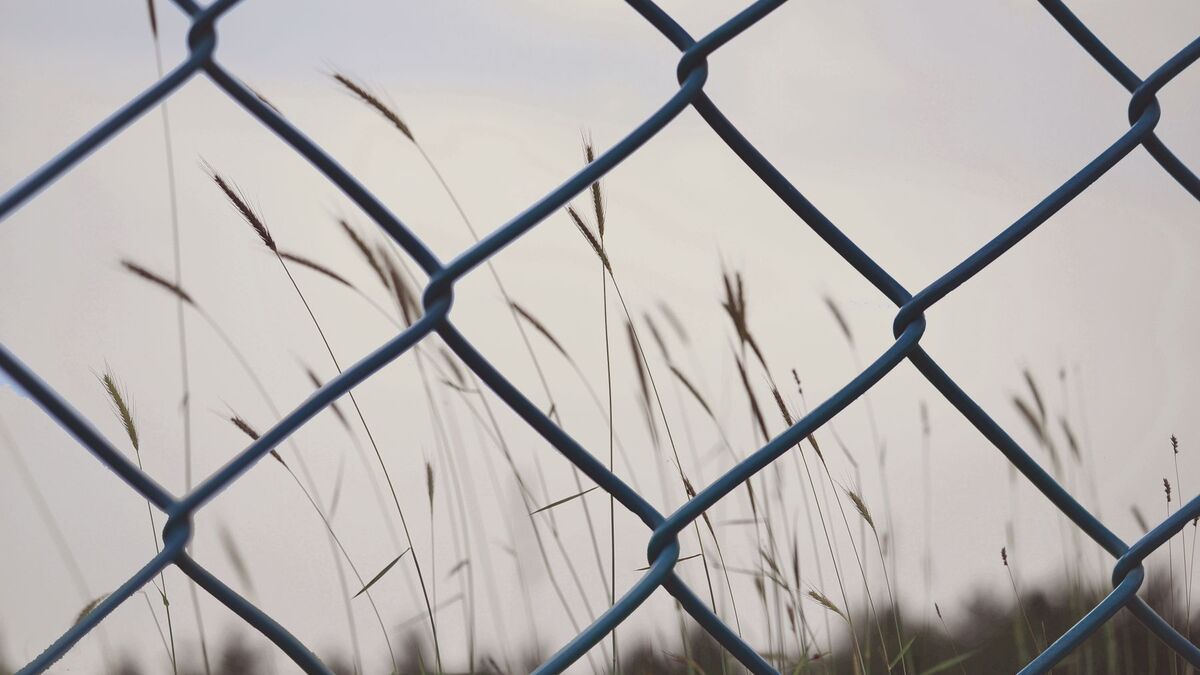
Why chain link still earns a place in Jefferson County yards
Chain link keeps a dog in without blocking the view, lets breeze through on a sticky July afternoon, and shrugs off the freeze, thaw and refreeze cycle that splits boards and loosens nails. Nothing on it needs staining, and a bumped mower barely scuffs it.
Around Louisville it shows up along back property lines, beside alleys in the older city grids, around dog runs and gardens, and across the rear of larger east-end lots. Plenty of owners put wood privacy fence or vinyl where the street can see it, and chain link where only the dog does.
Wire gauge: the number that tells you how stout the fabric is
Gauge is a measure of how thick the woven steel wire is, and the scale is counterintuitive, since a lower gauge number means a thicker, stronger strand. Two quotes for identical footage can look the same until one lists a lighter gauge, which is often where the gap between them comes from. Light residential fabric suits a calm dog and a modest yard but dents where kids climb. Heavier wire such as 9 gauge stays stiff when a big dog hits it at a run and resists bending from falling limbs.
With coated fabric, ask how gauge was measured. Vinyl-coated wire is sometimes labeled by its finished thickness, coating included, so a heavy-sounding number may hide a lighter steel core than plain galvanized wire with the same label.
Mesh size and what it changes about climbing, pets and looks
Mesh is the width of each diamond. The everyday residential weave is a two-inch diamond. Slightly larger openings use less wire but give a toddler's shoe or a small dog's head more room. Tighter diamonds are harder to get a toe into, which is why they appear around tennis courts and some pool enclosures, and they stop a terrier from pushing its face through. Mesh also decides which privacy slats fit, so settle it before ordering slats.
Galvanized, aluminized or vinyl-coated: choosing the finish
Bare steel would rust within a season in a humid river-valley climate, so every residential fabric carries a protective layer. Whatever the finish, match the framework to it; black fabric on bright silver posts looks unfinished.
- Galvanized after weaving: woven first, then dipped, so zinc seals the bends and twists where rust starts.
- Galvanized before weaving: coated first, then woven; serviceable, though the knuckles can freckle with rust sooner.
- Coating weight: a heavier zinc class lasts longer, so a proposal should name the class rather than just saying galvanized.
- Aluminized: steel coated with aluminum instead of zinc, with good corrosion resistance and a duller look.
- Vinyl-coated: black, green or brown polymer fused over a galvanized core. Black is the local favorite because it disappears against lawns and tree lines.
The framework: terminal posts, line posts, rails and fittings
Fabric is only as good as the steel skeleton it hangs on, and the part names on a quote mean specific things:
- Terminal posts: the stouter uprights placed at each end, each change of direction and both sides of a gate. All the stretching force ends up here, so these must never lean.
- Line posts: lighter posts carrying the fabric between terminals. Wider spacing saves material and costs stiffness.
- Top rail and bottom tension wire: the rail keeps line posts aligned and the fabric upright; the wire stops the bottom edge from being nosed out or pulled up.
- Tension bars and bands: a flat bar threaded through the fabric end and clamped to the terminal, spreading the pull down its full height.
- Brace rails and truss rods: on taller or longer stretches, a horizontal brace plus a tensioned diagonal beside each terminal stop the corners from slowly tipping inward.
- Wall thickness: heavy schedule tubing resists bending far better than thin roll-formed tube of the same diameter. Ask what the posts are made from.
Fabric heights, top edges and what the address allows
Fabric comes in standard roll heights. Four feet is the usual backyard height for kids and most dogs. Five feet suits larger, athletic dogs. Six feet is common on back lines and anywhere the aim is keeping people out as much as pets in. Louisville Metro, the small cities inside Jefferson County and many subdivision associations each set their own height, placement and corner sight-line rules, so confirm what your property allows before fabric is ordered.
Check the top edge too. Knuckled selvage folds the wire ends into smooth loops; twisted selvage leaves cut points facing up. With children or jumping dogs, knuckled on both edges is the friendlier choice.
Stretching the fabric: tension decides how long the fence looks good
Loose fabric is the most common reason a new fence looks tired after two winters. Hand-snug fabric relaxes under its own weight, and a terminal post set too shallow in wet clay can be nudged by frost heave until tension along the whole run lets go. A careful installer works in this order:
- Band a tension bar through the first row of diamonds to a terminal post.
- Unroll the fabric on the outside face of the posts and lift it onto the top rail.
- Pull with a stretcher bar and come-along until the diamonds narrow evenly and the slack is gone.
- Unweave one wire to cut to length, insert the final tension bar and band it while the pull is still on.
- Tie the fabric to every line post, the top rail and the bottom wire at regular intervals.
- Sight down the run from each end; the diamonds should be uniform and the bottom edge steady above grade.
Privacy slats and screening for chain link
Slats are polymer strips woven through the diamonds to turn see-through fencing into a screen. Standard tubular slats leave visible gaps; winged slats fill the diamond almost completely; bottom-locking designs sit in a base channel so they cannot creep or blow loose; hedge-style slats imitate a clipped shrub row from a distance.
Slats change the engineering. Open fabric lets wind pass, but a slatted fence catches every gust like a wall, and an ice storm adds weight on top of that. A run framed light for open fabric may lean once fully slatted, so the framework should be checked before slats go onto an older fence.
Keeping dogs in: climbing, jumping and digging defense
Every dog finds the weak point. Jumpers need height. Climbers learn to use the diamonds as a ladder, which tighter mesh or an inward-angled top discourages. Diggers go under, usually where the ground dips between posts.
Keep the bottom of the fabric close to grade along the whole line, with the tension wire tied in tightly, and fill any triangle of daylight where the yard falls away. For a determined digger, bury a strip of galvanized or coated wire mesh along the inside and tie it to the bottom edge, or pour a narrow concrete mow strip. Then check each gate: the gap underneath, the space at the latch side, and whether the latch is something a dog can nose open.
Chain link gates: walk gates, double drives and pool latches
Gate posts should be heavier than ordinary terminals because they carry swinging weight. A walk gate wide enough for a wheelbarrow and push mower is the most common; double drive gates open a wide span for a riding mower or trailer and are pinned shut with a drop rod. A fork or gravity latch should close without lifting, and a gate that starts dragging usually means its post has moved.
Where the fence is part of a swimming pool barrier, gates generally must be self-closing and self-latching, with the release out of a small child's reach and no footholds nearby. The adopted building code sets every figure, mesh size and latch height included, so confirm them with the local office before ordering.
Cost drivers and what a chain link proposal should spell out
The contractor prices chain link after seeing the property. The total moves with run length, height, gauge and finish, the count of corners, ends and gates, hidden rock, slope, old-fence removal and haul-away, equipment access, and extras like slats or a dig barrier. Setting posts below frost in clay and limestone is detailed on the fence installation page, and re-stretching an existing run falls under fence repair.
Sketch out where the fence should go and share the property details with us, or look over the communities served across Jefferson County.
- Height, mesh, gauge, and whether gauge is measured at the core or over the coating.
- Galvanizing method and class, or vinyl color with matching framework.
- Terminal and line post sizes, wall thickness and line post spacing.
- Top rail, bottom wire, terminal bracing, gate widths, hinges and latches.
- Who handles the Kentucky 811 locate, any permit, and old-fence removal.
- The workmanship coverage, in writing, and what it excludes.
Chain link fences for Louisville yards — common questions
How long does a galvanized chain link fence last in Kentucky?
A well-built galvanized fence commonly lasts for decades, but the number depends on the coating, the site and how it was put up. Rust usually starts in predictable places: cut wire ends at the top, the bottom few inches where fabric touches soil or wet mulch, and spots where sprinklers hit it every day. Heavier zinc coatings and galvanized-after-weaving fabric hold off that rust longer. Keeping the bottom edge clear of mulch beds and leaf piles and trimming vines off the wire both stretch its life noticeably.
Can I add privacy slats to the chain link fence I already have?
Usually, as long as the slats are sized to your mesh and the framework can take the extra wind load. Measure a diamond before buying, because slats are made for specific openings. Then look hard at the fence itself. If the fabric is loose, slats will bow it further. If the line posts are light or the terminals already lean, a fully slatted fence can push them over in a strong storm. Sometimes the right move is re-stretching and adding bracing first, then slatting.
Is black vinyl-coated chain link worth it over plain galvanized?
For most visible residential runs, owners who choose black are glad they did. The coating makes the fence recede against grass and trees, so a backyard reads as open space rather than a cage, and it adds a second layer of corrosion protection over the galvanized core. It also feels smoother to touch. Plain galvanized makes more sense on a long back line nobody sees, along a utility easement, or wherever the budget is tight. Match the framework color, or the effect is lost.
What chain link gauge should I get for a large dog?
Heavier is better when a large, energetic dog will be hitting the fence, leaning on it or jumping up against it. Lighter residential fabric dents and stretches where a dog paces and pushes, and those soft spots turn into escape points. A heavy gauge such as 9 gauge keeps its shape far longer. Height matters as much as gauge, and so does a bottom tension wire tied tightly along the base. For a digger, add a buried mesh apron along the inside of the line.
Can you paint an old chain link fence black?
It can be done, but it is a lot of work for a finish that will need touching up. The wire has to be cleaned of dirt and loose rust, then coated with a metal primer and a paint made for galvanized steel, usually sprayed or rolled with a thick-nap roller from both sides. Every diamond has four faces, so coverage takes time. If the fabric is also loose or rusting through, replacing it with factory vinyl-coated fabric on the existing posts is often the better use of money.
Will my homeowners association in the Louisville area allow chain link?
It depends entirely on the covenants for your subdivision. Some associations in newer east-end developments prohibit chain link outright, some allow it only in back yards, and some permit black vinyl-coated fabric while banning plain galvanized. Many also require you to submit a drawing and material description before work begins. Read the recorded covenants or ask the management company in writing before you sign anything, because removing a fence the board did not approve is an expensive way to learn the rule.
Talk through your site
Start with the address, what you want done, and a few photographs of the area, including anywhere water sits after a heavy rain.
Related work
Fence Installation
New fences on Kentucky clay and limestone, set below frost, with permits and gates done right.
Fence Repair
Leaning posts, storm damage, rotted boards and sagging gates, repaired or replaced.
Wood Fences
Treated pine and cedar privacy and picket fences, and how wood handles humid summers.
Vinyl Fences
Vinyl privacy and picket styles, quality differences and care in a humid climate.
Farm and Plank Fences
Board plank fencing, post-and-rail and wire farm fence for acreage, horses and long runs.
Across the metro
Jeffersontown
East-side suburban city with ranch homes, subdivisions and back-to-back yards.
St. Matthews
Established older neighborhoods with mature trees, tight lots and alleys.
Middletown
Eastern suburbs with newer subdivisions, association standards and pools.
Prospect
Northeast lots with larger acreage, river bluffs and estate-style fencing.